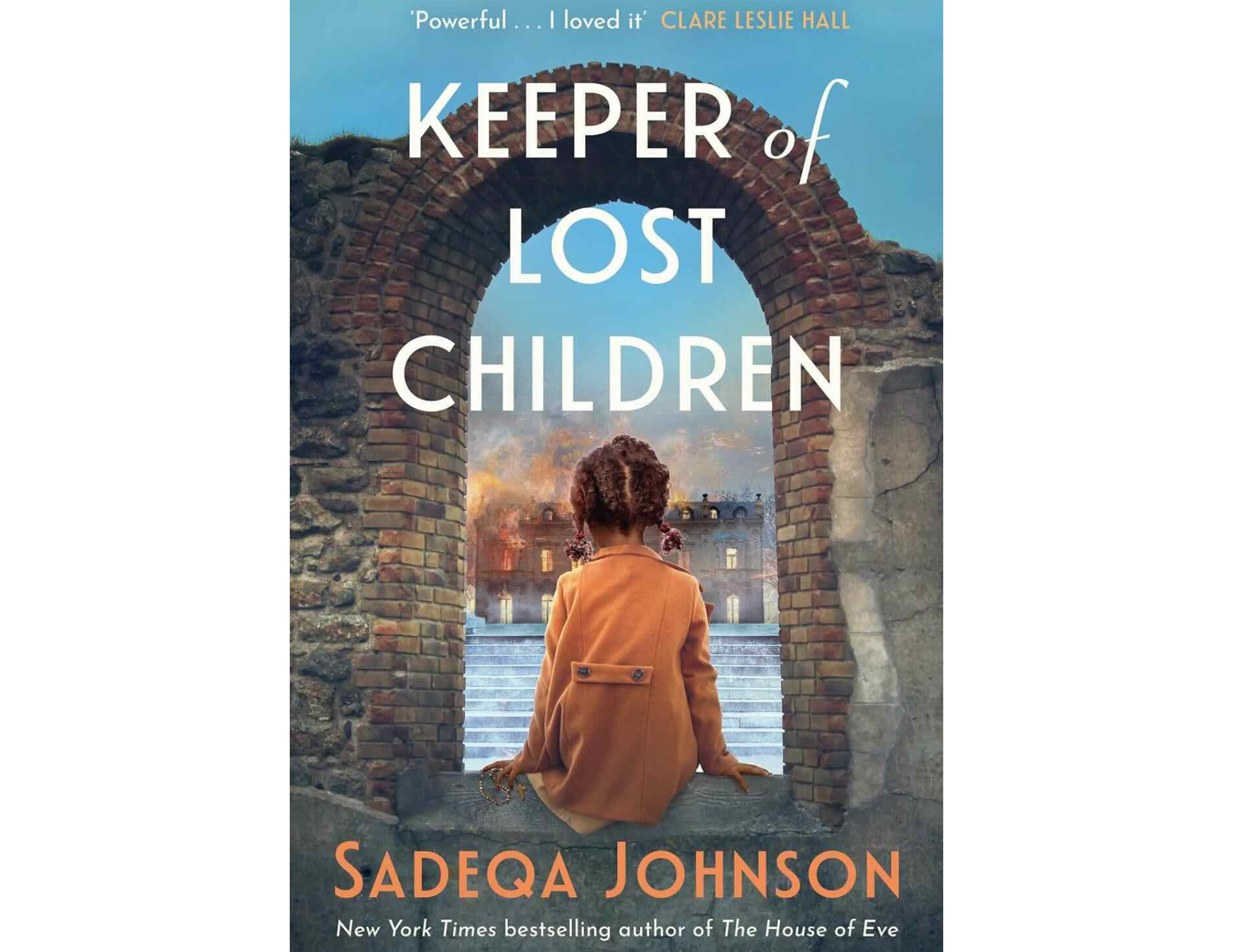
In her latest novel, Keeper of Lost Children, Sadeqa Johnson explores a story that stretches across time, geography, and the limitless possibilities of love. Johnson built the lives of her characters on the real-life accomplishments and experiences of Mabel Grammer, an African American journalist whose “Brown Baby Plan” facilitated the overseas adoption of mixed-race German orphans post World War II. Wrapped up in one novel are the lives of three strangers whose past and futures are tied together by racial tensions and the desire to be loved in an unwelcoming world.
At its core, this novel is propelled by three Black main characters whose stories unfold across the decades following the end of World War II. Johnson grounds her narrative in one of the forgotten results of World War II: hundreds of children born from unmarried German women and Black American soldiers, which becomes the foundation for a beautifully told story of historical recovery and the intimate acceptance of identity.
The plot develops through the perspectives of three distinct personalities. Ethel Gathers is a proud journalist for the Baltimore Afro-American newspaper living in 1950s Mannheim, Germany, alongside her American soldier husband. Her quiet yet desperate desire to become a mother drives her toward finding her greater purpose. Also in Mannheim, a few years earlier, is Ozzie Phillips, a young man from South Philadelphia, who has volunteered for the army in hopes that Germany might offer him something that America never had: a life unburdened by racial tensions. What he discovers instead is love with a German woman that complicates everything he believed about freedom. Lastly, there is Sophia Clark, a teenager in 1965 Maryland who is given the opportunity to attend an all-white boarding school and forced to navigate racial hostility while uncovering truths of her identity. As the story progresses, each character finds what they’ve spent their whole lives longing for along with uncovering the harsh truths that come with it.
Through following Ethel, Ozzie, and Sophia, readers will experience the central theme of how love and identity survive—and fail—in all their forms. Ethel longs to share the love of a family. Ozzie’s growing disillusionment challenges the future he could have had. And Sophia carries the weight of finding self-acceptance in places that do not want her there.
Johnson’s use of alternating perspectives and timelines creates depth and contrast of the characters and leaves the reader equally invested in each of their lives. Rather than presenting the plot chronologically, she allows information to be pieced together by both the characters and readers. Johnson places each perspective side-by-side to show how the desire to be chosen, to belong, and to have something greater than themselves is interconnected, and how these desires can outlast oppression, even if those desires become unrecognizable.
Johnson places the reader in the disturbing reality of racism both in America and Germany in the span of the two decades following the war. Each character learns to face their past while dealing with the social issues of their present day. In particular, Sophia’s experiences as one of the first Black students at her recently desegregated high school illustrates, in unsettling detail, the depth of the racial hostility present during the 1960s. Johnson also does not shy away from showing the social and racial issues across the Atlantic. Ethel and Ozzie’s lives show different perspectives of the same limitations and discrimination faced by Black Americans in the military where their American identity is often challenged. Despite its heavy themes, the novel is balanced by its steady pacing and alternating perspectives, which depict heartfelt moments that bring these characters to life.
Keeper of Lost Children is a work of remembrance for a missing chapter in history books. Johnson takes the past and transforms it into a deeply personal and rich portrait of three lives shaped by war, race, and the persistent hope of belonging and finding identity. Through Ethel, Ozzie, and Sophia, Johnson explores how identity and love can be both a refuge and confrontation, especially for those forced to be in places that refuse to accept them. What readers will take away from this novel isn’t just a history lesson; it’s a reminder that the truth can survive any distance, time, or attempts to suppress it.
You can learn more about Sadeqa Johnson and her work and purchase a copy of Keeper of Lost Children here.
Keeper of Lost Children
Sadeqa Johnson
37 Ink
February 10, 2026
464 pages

Katharine is a third-year student at the Drexel University pursuing a B.S. double-majoring in Marketing and Business Analytics. She loves reading fantasy books and dreams of working within literary publishing after graduation. Aside from curling up under a pile of blankets, you can find her journaling, rewatching her favorite TV shows, and attempting to propagate her houseplants.