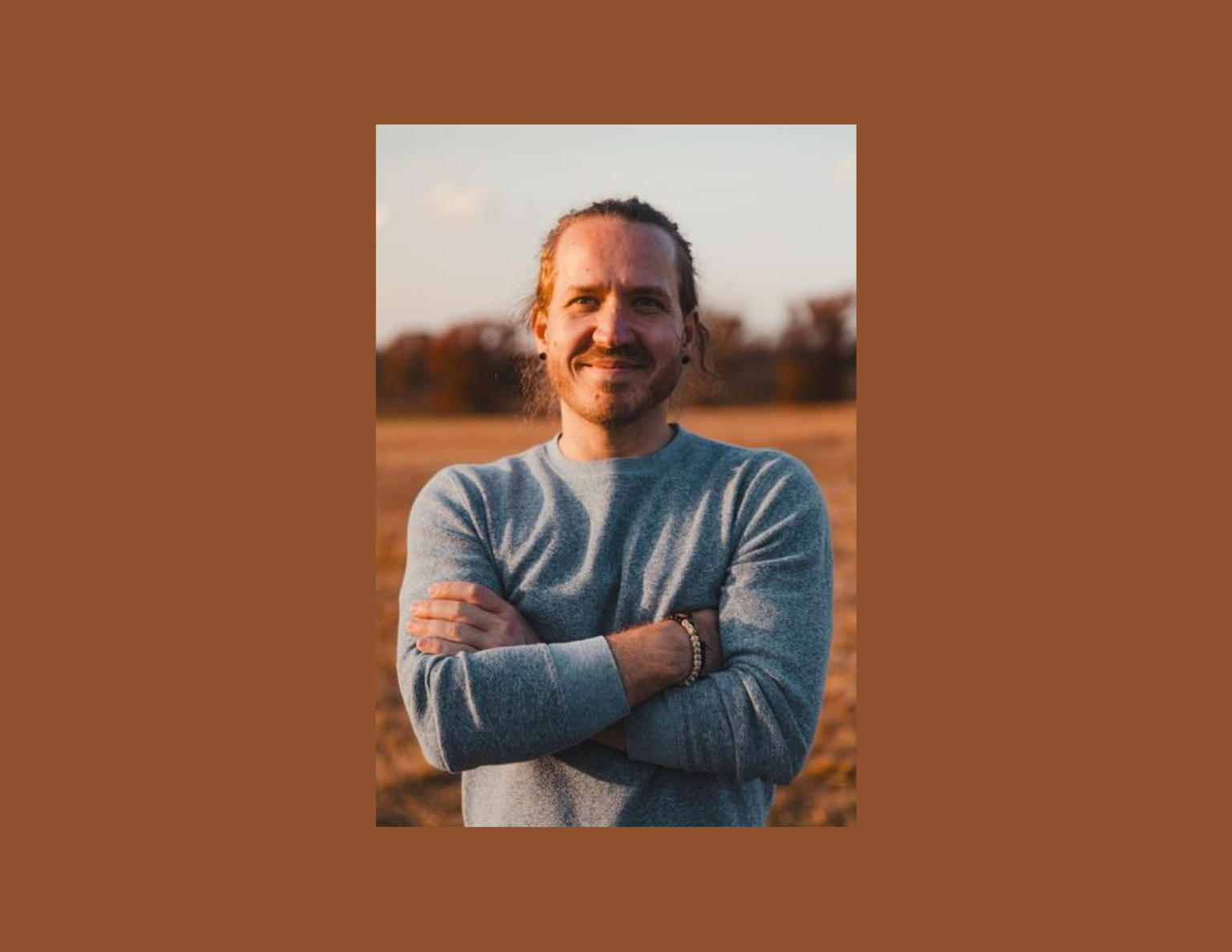
Travis Curtice is a Philadelphia-based political scientist and assistant professor at Drexel University. His work centers on the politics of policing and state repression, and his book, The Repression Dilemma: Trust, Political Violence and the Politics of Policing in Uganda is expected to release by next spring.
Veronica Medlock: How did you get into writing about policing as it relates to politics? What inspired you?
Travis Curtice: When I was in college, I had an opportunity to go work in northern Uganda to do food relief work. From the 90s into the early 2000s, the area had been affected by a conflict between a rebel group, the Lord’s Resistance Army (LRA), and the Ugandan government’s forces, Uganda’s Peoples Defense Force, which led to more than 1.5 million people being internally displaced and forced into camps. One of the things that stood out to me about that conflict was, if you learned about it within the United States, the narrative was always that the rebels were bad and the government was good. When I was in Uganda, it became clear that their government was actually responsible for a lot of the human rights abuses that had been occurring, and that just wasn’t the way that the international community framed what was happening there. Several prominent Ugandan elders and leaders encouraged me to go back to the United States and think about the types of advocacy work, or the types of research that I could do to kind of shift the narrative that, yes, the rebels were doing horrific things, that absolutely was the case, but the government also was complicit in these human rights violations. So that was the origin of the project, thinking about political violence through that lens.
Then I lived in Missouri and followed the police violence surrounding the death of Michael Brown in Ferguson. I also lived in Atlanta, where there was a lot of general violence by the Atlanta Police Department. I started thinking about how marginalized communities interact with the police, the links between marginalized communities and the police, and political violence. Many may not traditionally think of police shootings as political violence, but I certainly do. So it was this developmental lens of, here’s what’s happening in this faraway place that most people couldn’t place on a map, but also, here’s what was happening in the United States in 2020, and it just kind of spiraled into this: we need better political science work on the politics of policing. I was able to use the political violence within Uganda as a lens and a backdrop to write a broader book on the relationship between political authorities, policing, and communities.
VM: What has your writing process looked like for this, your first published book? How does it differ from writing an academic paper? What was new for you?
TC: The first draft, or several drafts, was my doctoral dissertation, which was about 7 chapters in itself. When it’s a dissertation, you’re writing for the scholarship that you’re directly contributing to, you’re writing towards your advisor, you’re writing towards trying to prove that you know the science. But the pivot to writing for a book is that I want someone who walks into a Barnes and Noble to be able to just be like, oh, this is a book on policing, and it’ll still have the statistics, it’ll still have the rigorous science, but it also needs to be approachable in a different way than an academic journal is. That was a really interesting balance during the revision process, to be actively thinking about the audience. It’s not just a book for political scientists anymore; it’s a book for criminologists and sociologists and policy makers, so making sure that the book is still rigorous and scientific, but also accessible is important. In the age of AI, you can just put something into a chatbot and that’s really efficient and fast, but I think that part of my book-writing process was the importance of struggle, the importance of sitting with multiple drafts and revising and iterating. It’s such an iterative process. That’s what eventually made the book as strong as it became—the multiple steps and the struggle. I wish that it would just be as easy as just putting it in Claude or ChatGPT… set up some codex agents, and just have it write this book for me, and then it’s painless, but so much of the book actually becoming what, I think, will end up being a seminal text on policing, was that it wasn’t an easy pass, and it wasn’t just a straight linear success. I had this idea, and my advisors told me that it was stupid, and that I should go back, and that there’s nothing inherently political about policing—I should do something else. I had to go back and defend the idea, so each step of the process was this, Am I being clear? Is this idea worth fighting for? The struggle, actually, I think, helped it be a better project.
VM: Are there any specific struggles you felt while writing this book? Is there anything you didn’t expect to be challenging that was?
TC: There are different types of struggles. There’s the struggle of just looking at the cursor blinking at you, and you’ve got to get words down. But even if you’re just revising, it’s still writing. Even if you’re sitting and looking at a blank screen, it’s still writing. Just going for a walk and thinking about the project is still writing. You have to create space and the bandwidth to struggle and to think and to write, and sometimes the hardest part is just budgeting the time and allocating it to be able to write. Then there’s other struggles… I mean, I’ve written a book about Uganda, which is in East Africa. I’m not Black, and I’m not African; I’m a white scholar writing about political violence in Africa. I don’t think that I am the most important voice to be writing this book. And so, for a long time, I left the manuscript on the shelf because of this delusion of: if I write it, I’m going to take up the space of someone else who could be writing it. But the truth is that if I don’t write it, there’s a whole lot of what’s happening in Uganda that’s not going to be talked about. I had a lot of Ugandans entrust a lot of information to me for me to write this book, and I don’t honor them by just leaving it as an unpublished manuscript sitting on my computer hard drive. Their stories need to be told, not because they’re voiceless, not because I’m the right voice to be sharing it, but because I have the pedigree that now Cambridge will publish it, and so it just needs to get out there. But that was difficult. I wrestled with that throughout the project, but I had several close Ugandan friends and several other human rights activists who reminded me that I’ve been given a whole lot of endowed trust by a lot of Ugandans.
VM: You’ve had a long journey writing this book. How have you kept hanging on to hope and kept pushing? How have you stayed on the path, even when nearly everyone in publishing is telling you no?
TC: I think you have to celebrate little wins. You have to believe in your work, and sometimes you may be wrong, but if you’re trying to make it perfect, and you’re trying to get everything right, you need to start somewhere. If you never actually get anything on paper, you’re never going to actually get anything out, so celebrate the wins, and just don’t take yourself too seriously. I have a new puppy; she doesn’t care if I’m published with Cambridge or not. I can sit by this river, and the water’s still going to run past me, rejected by Oxford or accepted by Cambridge, the water doesn’t care. Finding your smallness in the world. It feels like a really big deal when it’s like, oh, this is going to determine tenure, and it’s going to determine whether I get a job somewhere else someday. A lot of things depend on getting a book out. But at the end of the day, a lot of things are just the same.
You can learn more about Travis Curtice and his work here.

Veronica Medlock is a 3rd year English Major at Drexel University minoring in Writing and Politics. She is a huge grammar and mechanics nerd who loves to get into arguments about quirks of language that ultimately don’t matter. In her free time, she can be found editing, reading romance, or playing D&D.