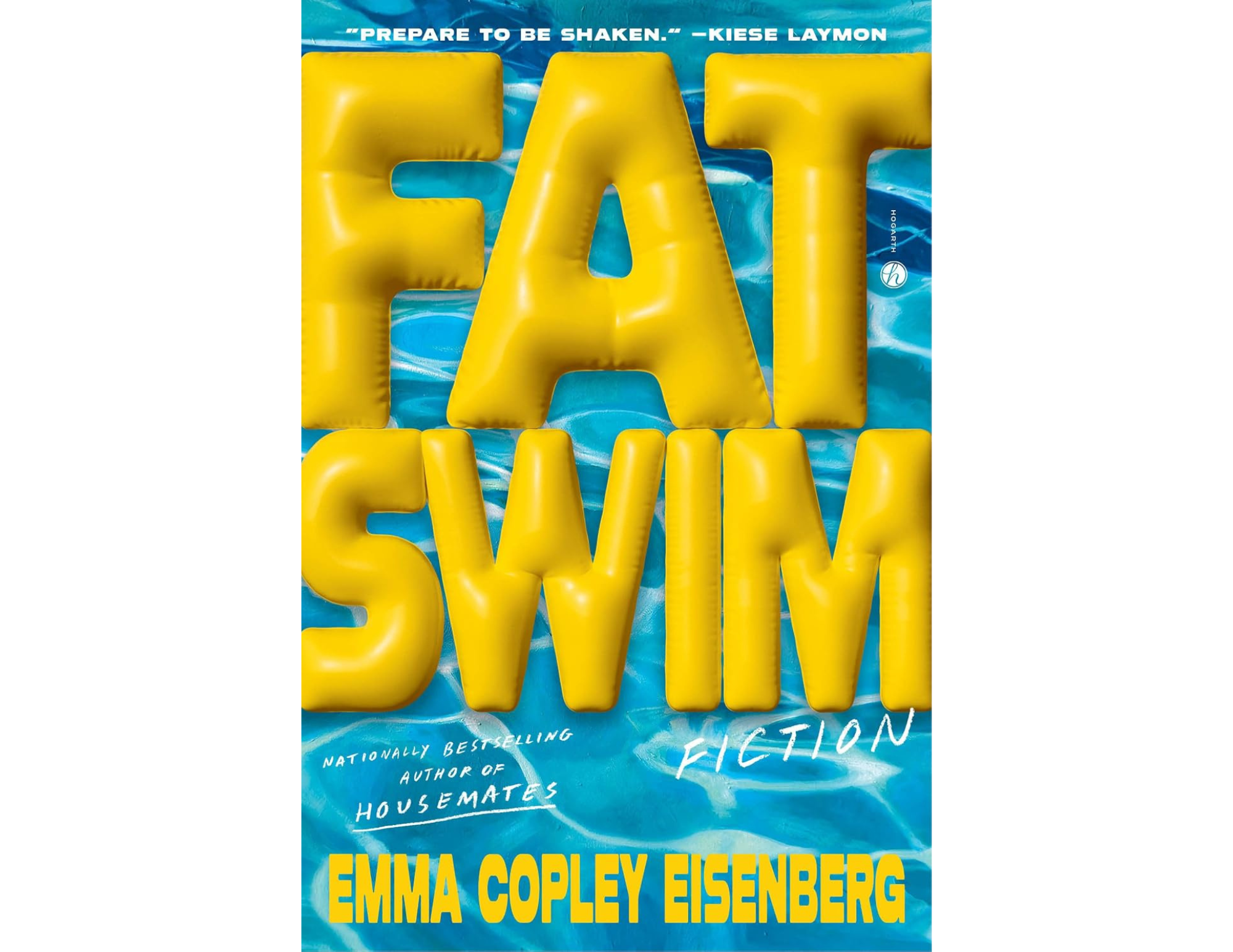
Fat Swim is an electrifying new short-story collection by the author of Housemates, Emma Copley Eisenberg. The stories are told almost entirely in first person, following different character perspectives, all of them vibrant and, at times, bizarre. There are some characters who show up throughout the collection more than once, such as Gin, a clingy, energetic addict first featured in “Ray’s \ Happy Birthday Bar.” Throughout the collection, each angle of Gin differs from the last, with one standout depicting her as timid in an NA meeting. Such appearances serve to successfully weave together the world Eisenberg ushers readers into. The stories are each emotionally intense in their own way, as the collection shifts from coming-of-age moments to off-beat professional relationships and complicated familial dynamics. At the heart of every story, though, is individual personhood, as Eisenberg explores what that means for each character, and shares with us the ways in which they remind themselves that they are human. Both cynical and funny, the character voices she writes are strong and undoubtedly real, as her characters are all uniquely textured, the resulting friction between them riveting.
The title piece and first story, “Fat Swim” is grounded and compelling, showcasing the experience of a first crush from the perspective of a fat child named Alice, who is enamored with a local friend group of fat women and the magic she sees in them. Alice’s outlook on the world is cheery, juxtaposed by the bleak reality of her life, and the dysfunction of her relationship with her struggling single father.
Maybe, Alice says slowly, I am disappointed in you. Why do you cry at night? Is it because you suffer?
With his whole palm, Dad runs a hand down his face, wiping it of expression.
Working from such a specific, limited lens allows the details in the story to take on a new life, as the author uses exaggerated descriptions and stylistic choices to enhance the narrative.
Describing a woman’s leg hair, Alice thinks, “It feels soft like the caterpillars that Alice sometimes finds growing on Dad’s carrots in the garden. But more importantly, though the woman’s calf is fat like Alice’s, it does not feel the same.”
Readers can understand the emotions Alice is feeling, as well as the intensity with which she feels them.
Another highlight of the collection is “The Dan Graves Situation.” The story focuses on an encounter between Meredith Lovelace, an assistant director for an MFA program, and Dan Graves, a student struggling with suicidality and grief. After being asked to do a wellness check on Dan, Meredith finds him drunk, and melancholy. The unease of Meredith’s inner-monologue paired with the profuse sorrow Dan is entrenched in is deeply compelling, and such a dynamic serves to highlight the inner workings of each character.
She had not ever yelled during her critiques or flipped the seminar table, but she had taken that desire and channeled it into tiny acts of cruelty against people she would never see again, people who did not matter and who she did not believe—the telephone operator at her bank, the woman who worked the counter at the cupcake store, a stranger who came to buy an old desk she had in storage. ‘I was very angry that year,’ Meredith said. ‘I’m angry all the time,’ Dan Graves said.
Describing her own time in grad school to Dan, Meredith reveals to both Dan and readers that despite her annoyance at being pulled into the situation with Dan, she isn’t so different from him, as she had her own share of outbursts at his age. While Meredith’s mean streak adds an interesting, dark, layer of context to her solemn disposition, the end of the story is most haunting, as it further cements that Meredith is not so distanced from that younger version of herself, as she resorts to an act of cruelty to quiet Dan’s cries.
Such conflicts and quirks are precisely what make each of the collection’s ten stories so tantalizing, as Eisenberg refuses to turn away from the casual cruelty and morally gray acts humans can commit against each other in everyday interactions. These particular stories are among Eisenberg’s punchiest, but the collection at large remains colorful and dynamic far beyond them.
You can learn more about Emma Copley Eisenberg and her work here.
Fat Swim
Emma Copley Eisenberg
Hogarth
April 28, 2026
240 pages

Ronan Brinkley is a Philadelphia based writer and Drexel alumnus who completed their BA in English. They enjoy horror movies, and long walks on the beach. In their free time, they like writing poetry, reviewing books, and critiquing shoddy films. They dream of someday having a mug cabinet.